Contemporary vs Traditional Wardrobe Styles for East Lothian Interiors
Two Distinct Directions, One Practical Decision
East Lothian's housing stock covers a wide spectrum: sandstone Victorian terraces in Musselburgh, Arts and Crafts semis in Haddington, 1970s estates in Tranent, and modern new-build developments outside North Berwick. The wardrobe style you choose reads differently depending on which of these contexts it sits in. Getting that match right matters more than picking whichever finish looks good in a showroom.
Fitted wardrobes in either style are fully bespoke to your room dimensions, so the real decision is aesthetic and practical, not structural. Both contemporary and traditional approaches can be built to the same quality, carry the same 5-year workmanship guarantee and 10-year materials guarantee, and install in roughly 1–2 days for a standard single-wall configuration.
What Defines Contemporary Fitted Wardrobes
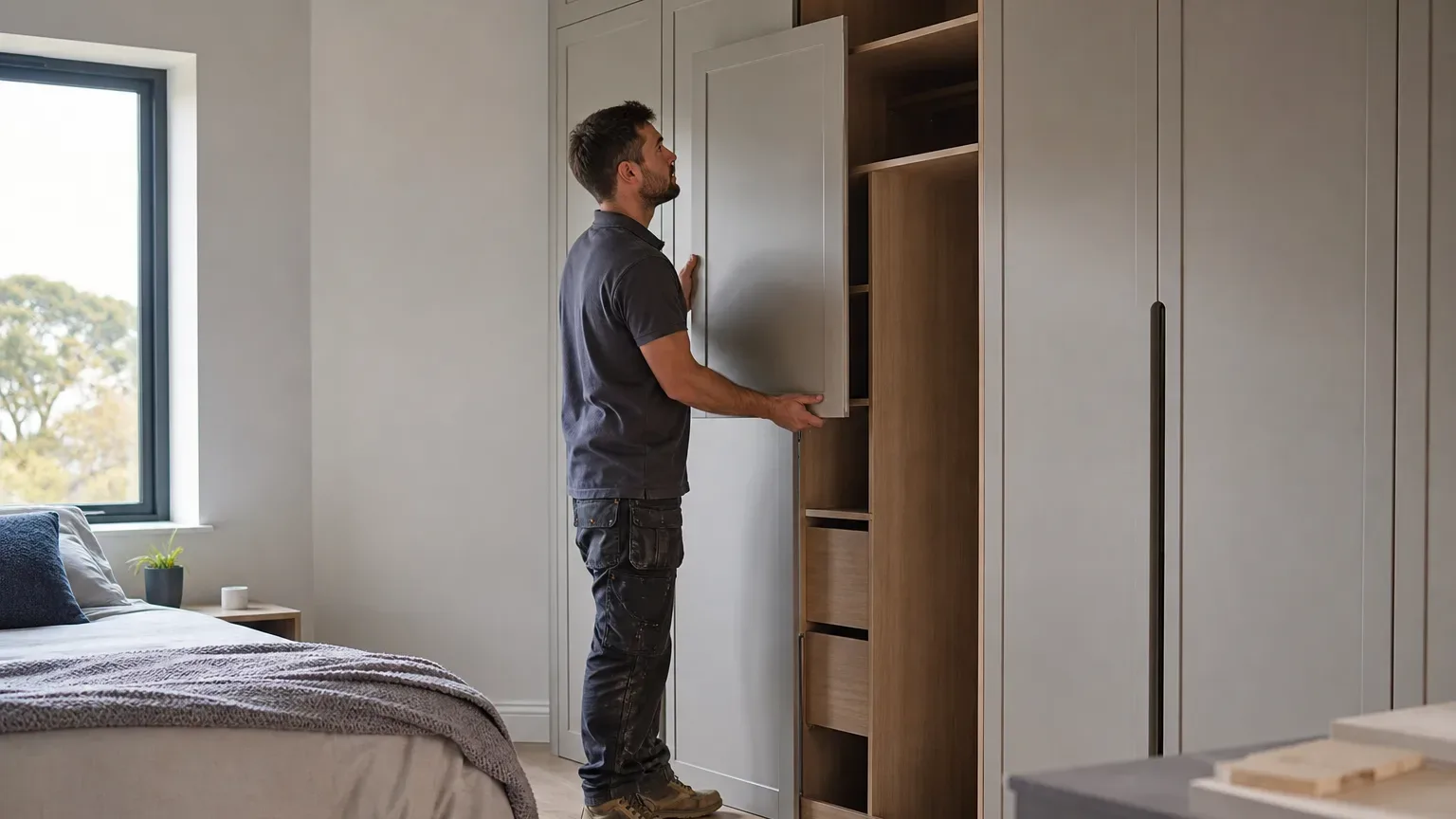
Contemporary fitted wardrobes favour flat-panel doors, integrated handles or push-to-open mechanisms, and a strong horizontal or vertical line unbroken by visible framing. High-gloss lacquers, matte foil wraps, and textured laminates in warm greys, soft whites, and deep charcoals are the dominant finish choices. The visual effect is calm and uncluttered, which suits rooms where the wardrobe is meant to recede rather than announce itself.
Sliding doors are strongly associated with the contemporary look. A sliding door fitted wardrobe adds roughly £200–£600 over a standard hinged configuration, but it repays that cost in rooms where door clearance is tight, such as the narrower bedrooms common in conversion flats along the East Lothian coast. Mirrored panels, priced at approximately £80–£200 per panel, sit naturally within this aesthetic and make compact bedrooms read as larger.
Where Contemporary Styles Work Best in East Lothian Homes
New builds in developments around Prestonpans, Dunbar, and the outskirts of North Berwick typically arrive with plain plasterboard walls, neutral carpets, and little architectural detailing. A contemporary fitted wardrobe reinforces that clean palette rather than fighting it. These homes also tend to have standard ceiling heights, which allows full-height handleless doors to create the impression of a taller room without any visual interruption.
Open-plan master bedrooms with en-suite access also benefit from the pared-back approach. A slab-door wardrobe running wall to wall can double as a room divider, concealing the en-suite entry behind a matching panel for a considered, hotel-like finish.
What Defines Traditional Wardrobe Styles
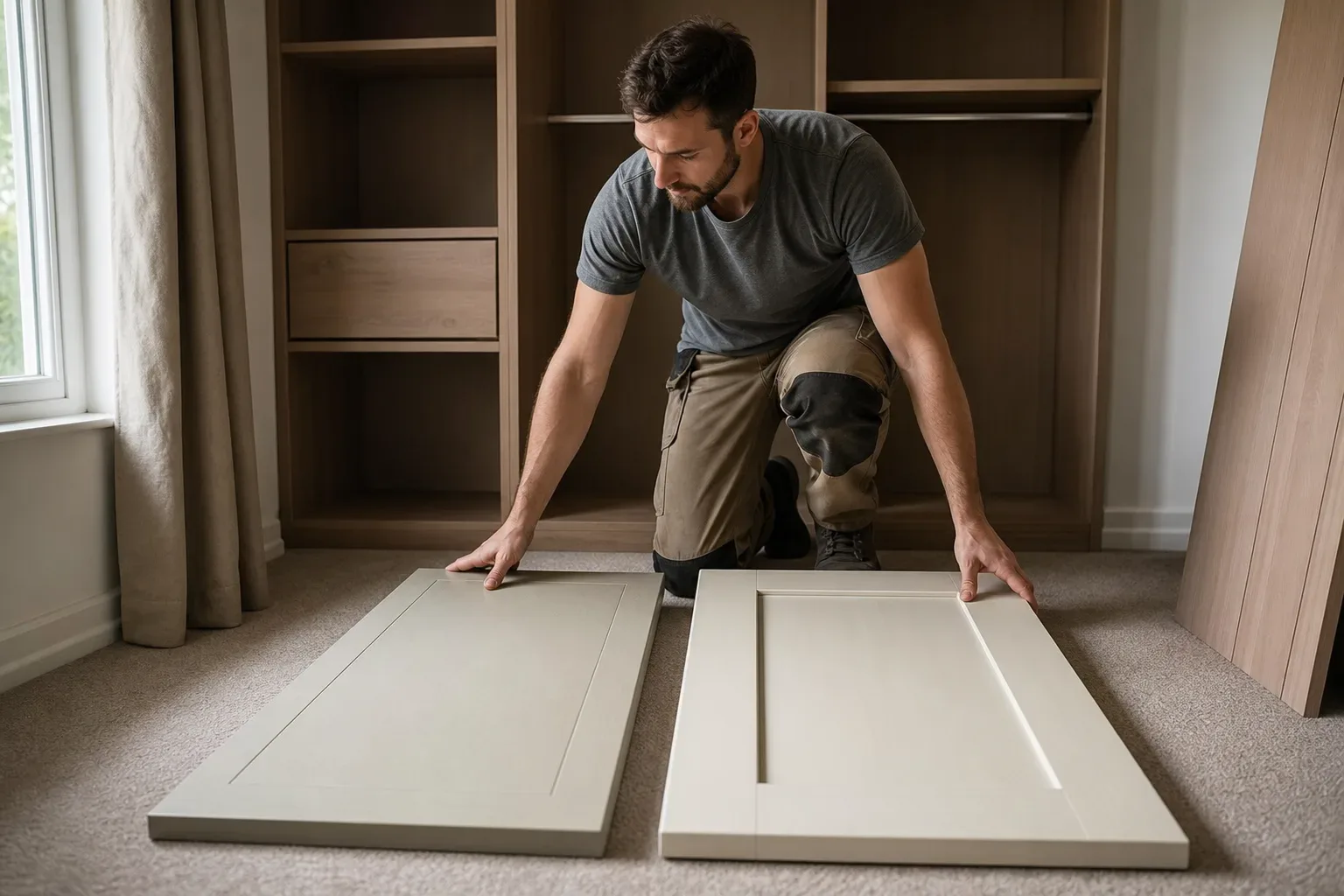
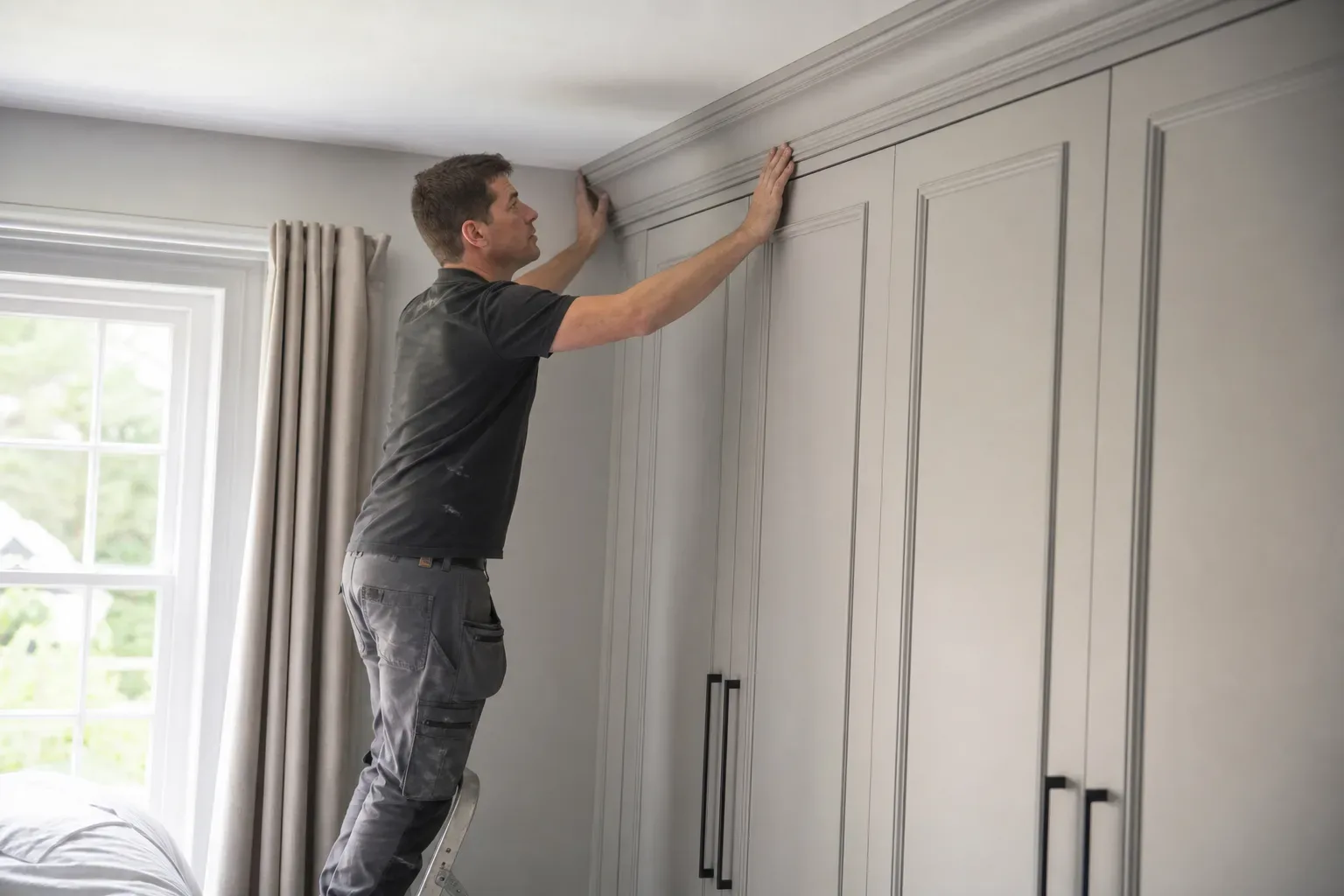
Traditional fitted wardrobes use raised or recessed door panels, visible framing, and decorative mouldings at cornice and plinth level. Painted finishes in heritage shades, shaker-style doors, and timber veneers are common choices. The style draws on furniture-making conventions rather than flat-pack or architectural minimalism, so the wardrobe looks as though it belongs to the room rather than being installed into it.
Handle hardware is visible and chosen deliberately: cup handles in brushed brass, bar handles in antique nickel, or ceramic knobs. These small details accumulate into a coherent period character. The cornice profile at the top can be matched to existing ceiling coving, which is a particularly effective technique in older East Lothian properties where original plasterwork is still intact.
Where Traditional Styles Work Best in East Lothian Homes
Sandstone properties in Haddington's town centre and the older residential streets of Musselburgh typically carry original fireplaces, panelled doors, and corniced ceilings. A shaker-door fitted wardrobe in a soft off-white or dusky green sits within that architectural language in a way a high-gloss handleless door simply does not. The goal is not pastiche but coherence: the wardrobe reads as something the room always had.
Farm steading conversions and cottages in the villages south of Haddington often have exposed beams and irregular wall angles. Traditional fitted wardrobes can accommodate these quirks more forgivingly because the framing and moulding detail visually absorbs small irregularities. A contemporary flat panel, by contrast, makes every degree of rake more conspicuous.
Comparing Costs Across Both Styles
The style choice itself rarely drives a large price difference at the same specification level. A painted shaker door and a matte-lacquer flat door cost similarly to manufacture. What drives cost is the complexity of the interior fittings, the number of doors, and any specialist finishes such as fluted glass inserts or hand-painted colour matching.
As a working guide, entry-level fitted wardrobes, covering a single unit in a basic finish, run from £800–£1,500 supply and fit. A full bedroom wall with a choice of interiors and finishes falls in the £1,500–£3,500 range. Bespoke walk-in configurations or full-room dressing room solutions reach £4,000–£8,000 and above. Both contemporary and traditional aesthetics are achievable across all three tiers; the tier determines the complexity, not the style.
Mixing Signals - When Hybrid Approaches Work
Strict category thinking breaks down in many East Lothian homes, particularly 1930s and 1950s semis where the architecture is neither strongly Victorian nor obviously modern. A shaker-style door in a contemporary neutral, fitted without a traditional cornice and with a recessed LED pelmet instead, bridges the gap credibly. The profile reads traditional; the colour and lighting treatment read contemporary.
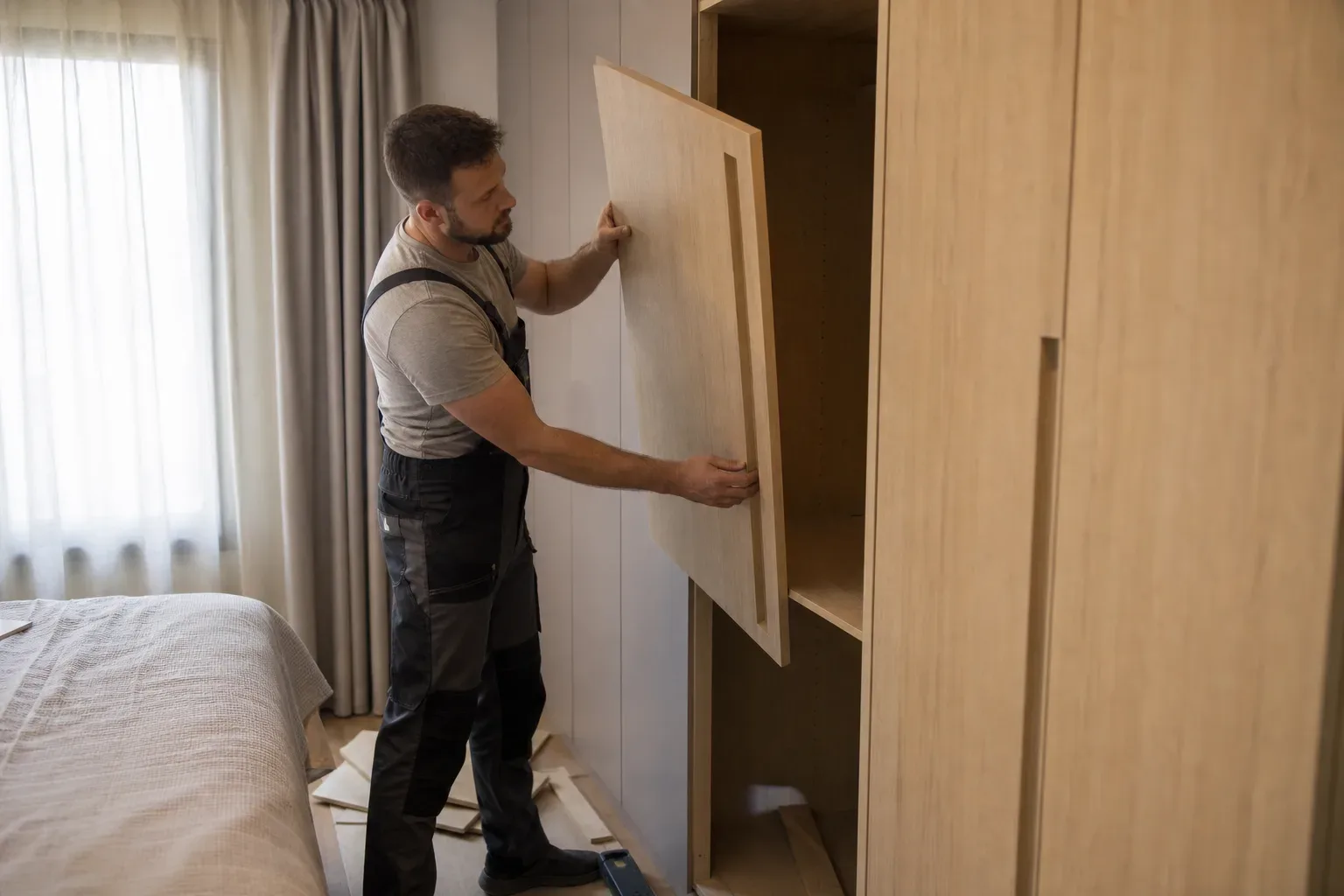
Similarly, a flat-panel wardrobe in a warm oak veneer carries more warmth and period sympathy than a stark white gloss version. Veneer finishes in natural timber tones are increasingly popular across East Lothian projects because they perform well in both character properties and newer builds. The material does the tonal work that the profile alone cannot.
Planning and Lead Times
Built-in wardrobes do not typically require planning permission in East Lothian, as they are classed as internal fixtures under permitted development rules. Customers in listed buildings or conservation areas should confirm with East Lothian Council before proceeding, as additional restrictions can apply in those specific contexts.
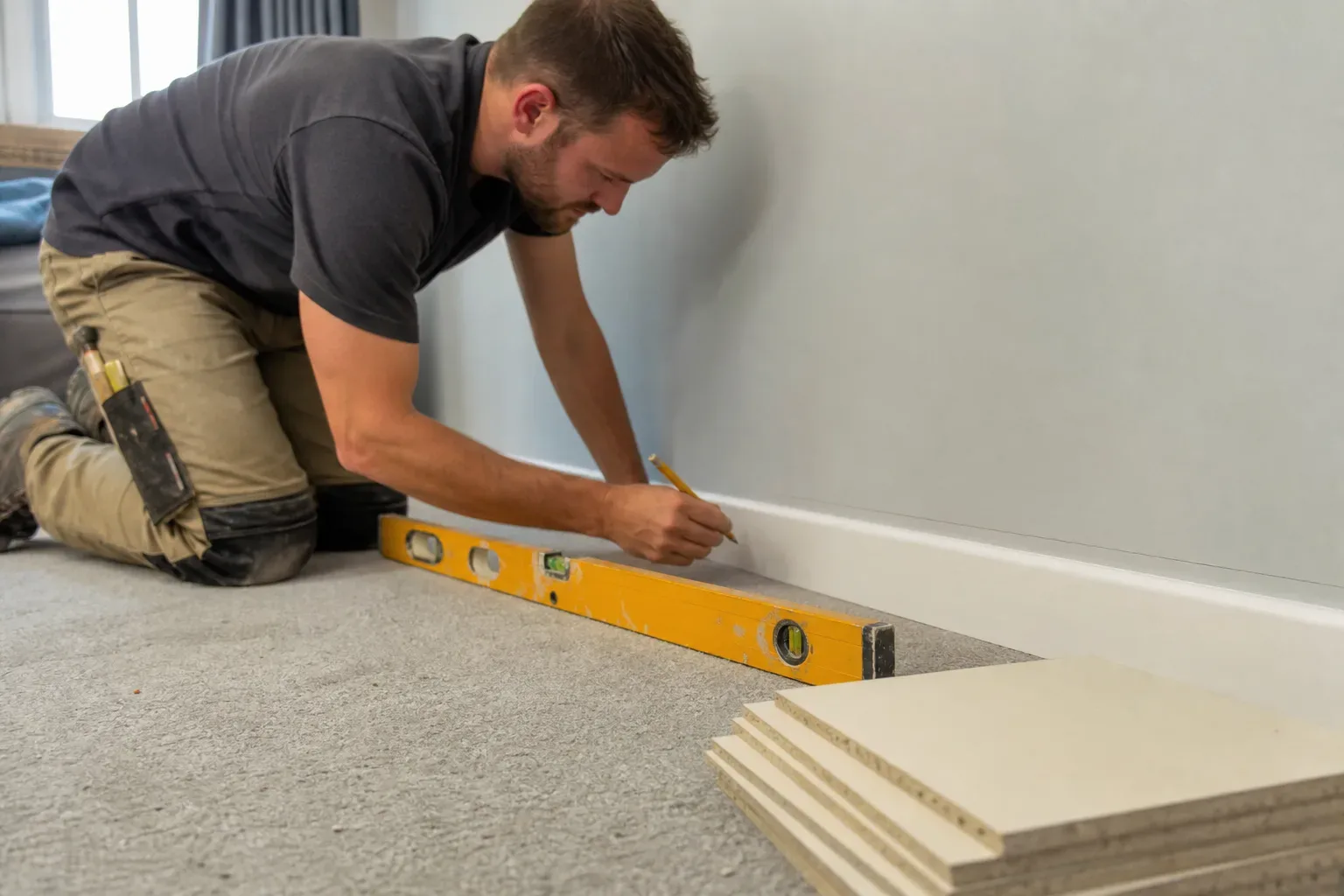
The standard process starts with a free home survey and design consultation, during which dimensions are taken and finish samples reviewed in your actual room light. A written, itemised quote follows within 3–5 working days. Once an order is confirmed, the lead time from order to installation runs 4–8 weeks, depending on material availability and scheduling. Homes that have recently completed snagging, typically 3–6 months after handover for new builds, are ready for installation without any additional preparation.
How to Decide Which Style Suits Your Room
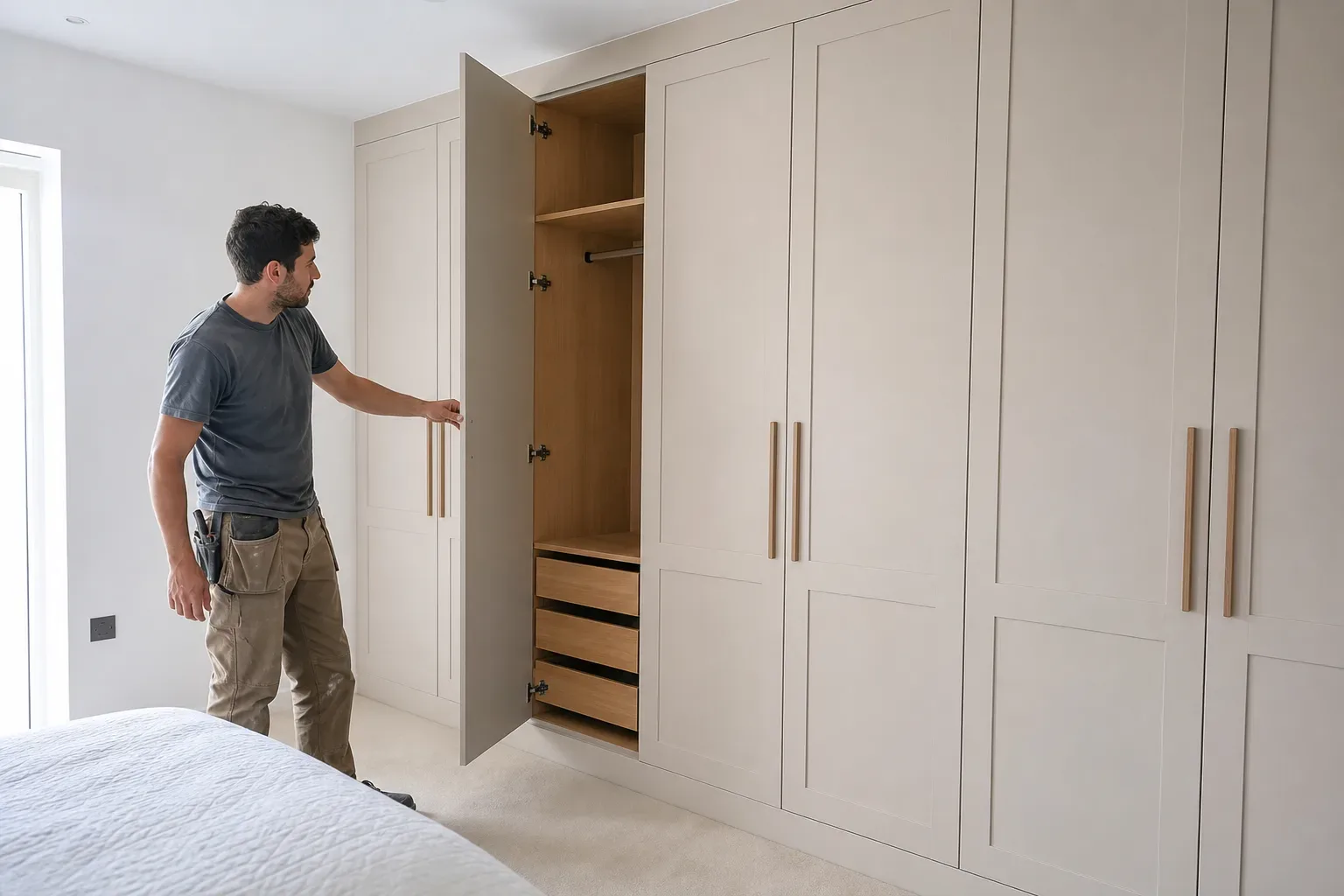
Start with the architecture of the room itself, not a mood board. Look at the door profile, the skirting depth, the ceiling detail, and the existing furniture. If those elements are plain and rectilinear, a contemporary fitted wardrobe will consolidate the aesthetic. If they carry period detail, even something as subtle as a deep skirting board, a traditional style will connect more naturally.
Lighting also shapes the decision. South-facing bedrooms in coastal East Lothian towns flood with natural light that makes high-gloss finishes flare unpleasantly by midday. A matte or satin contemporary finish, or a painted traditional finish, handles that light far better. Rooms with limited natural light often benefit from a mirrored panel regardless of the overall style direction, because the functional gain outweighs any style constraint.
Bring both options to your design consultation. A good fitter will produce scaled drawings of each approach in your actual room, which makes the comparison concrete rather than abstract.
Frequently Asked Questions
Are Contemporary Fitted Wardrobes More Expensive Than Traditional Ones in East Lothian?
Not significantly. The cost difference between a flat contemporary door and a shaker traditional door at the same specification level is minimal. What drives price is the size of the wardrobe, the complexity of the interior fittings, and any specialist finishes, rather than the style category itself. Both approaches are available across the £800–£8,000+ price range.
Do Sliding Door Fitted Wardrobes Suit Older East Lothian Properties?
Sliding doors are most closely associated with contemporary aesthetics, but they work in older properties where floor-to-ceiling space is limited or door clearance is tight. Choosing a door panel profile with a subtle framing detail can make sliding gear feel more sympathetic to a period interior. The sliding door upgrade typically adds £200–£600 over a standard hinged configuration.
Can I Mix Contemporary and Traditional Elements in a Single Wardrobe?
Yes, and it is often the best approach in East Lothian homes that fall between clear architectural periods, such as 1930s or 1950s semis. A shaker-profile door in a contemporary colour, fitted without a traditional cornice but with a recessed pelmet light instead, is one common hybrid that reads coherently in both older and newer interiors.
How Long Does It Take to Install Fitted Wardrobes in East Lothian?
A standard single-wall fitted wardrobe typically takes 1–2 days for a two-person crew. Larger projects such as walk-in wardrobes or full dressing room configurations run 3–5 days, including fitting, finishing, and snagging. The lead time from confirmed order to installation date is usually 4–8 weeks.
Do I Need Planning Permission for Fitted Wardrobes in East Lothian?
Built-in wardrobes do not typically require planning permission in East Lothian, as they are treated as internal fixtures under permitted development rules. If your property is a listed building or sits within a conservation area, you should confirm the position with East Lothian Council before ordering, as additional conditions may apply in those cases.