Fitted Wardrobe Interior Accessories for East Lothian Bedrooms
Why Interior Fittings Matter More Than the Carcass
The door and frame of a fitted wardrobe set the aesthetic, but the interior fittings determine whether the wardrobe actually works. A poorly organised interior with a single hanging rail and one fixed shelf wastes the majority of usable space. Thoughtful accessory choices, chosen to match how you actually dress and store, can double the effective capacity of the same footprint. That gap between frustrating and functional comes down entirely to what goes inside.
East Lothian bedrooms vary considerably in size and shape. Older stone-built properties in Haddington or Dunbar often have rooms with awkward alcoves or lower ceiling heights, while newer builds in Prestonpans and Tranent tend to offer more standardised dimensions. A fitter who surveys your room properly will account for those quirks before specifying any internal configuration.
The Core Accessory Categories
Hanging Rails
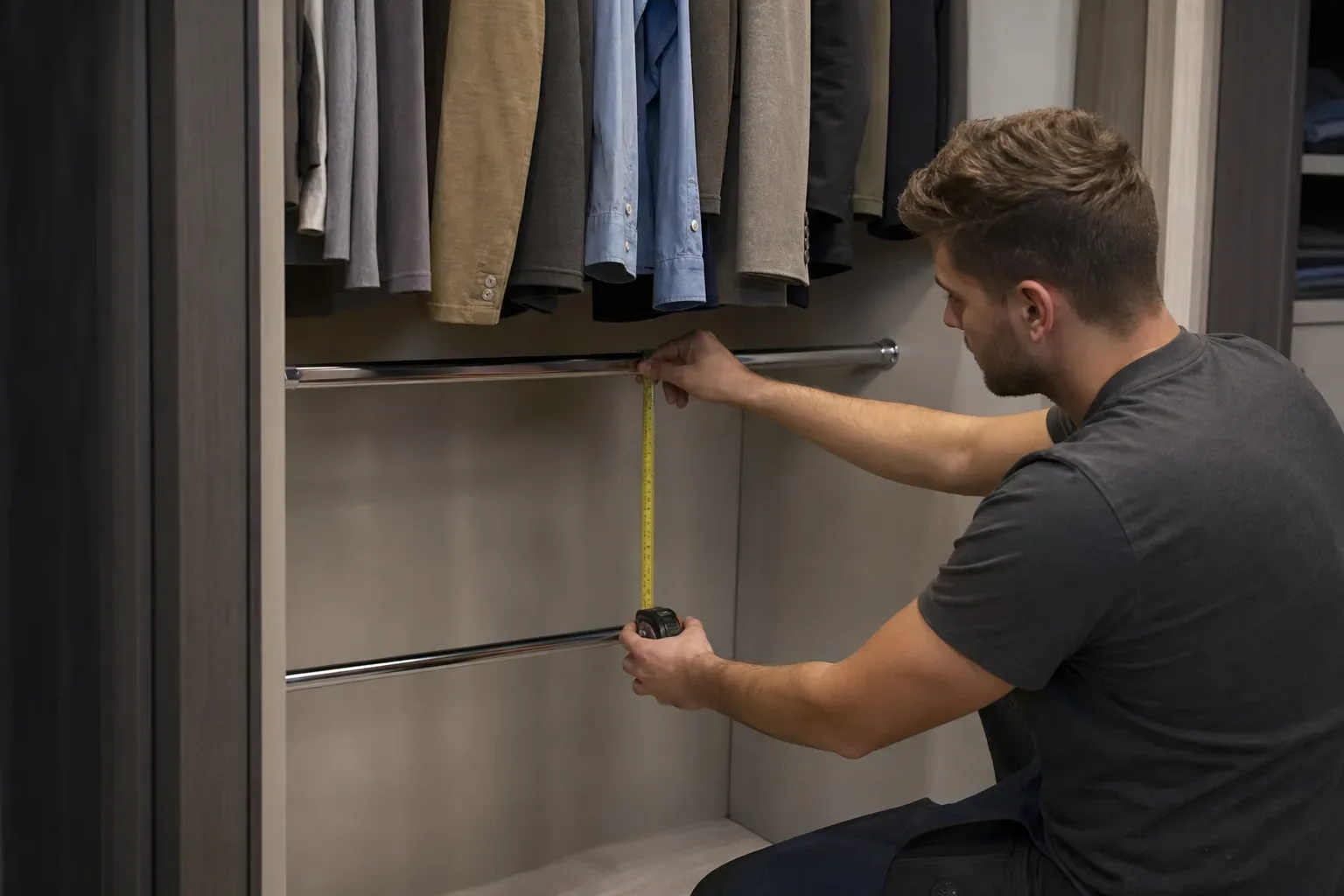
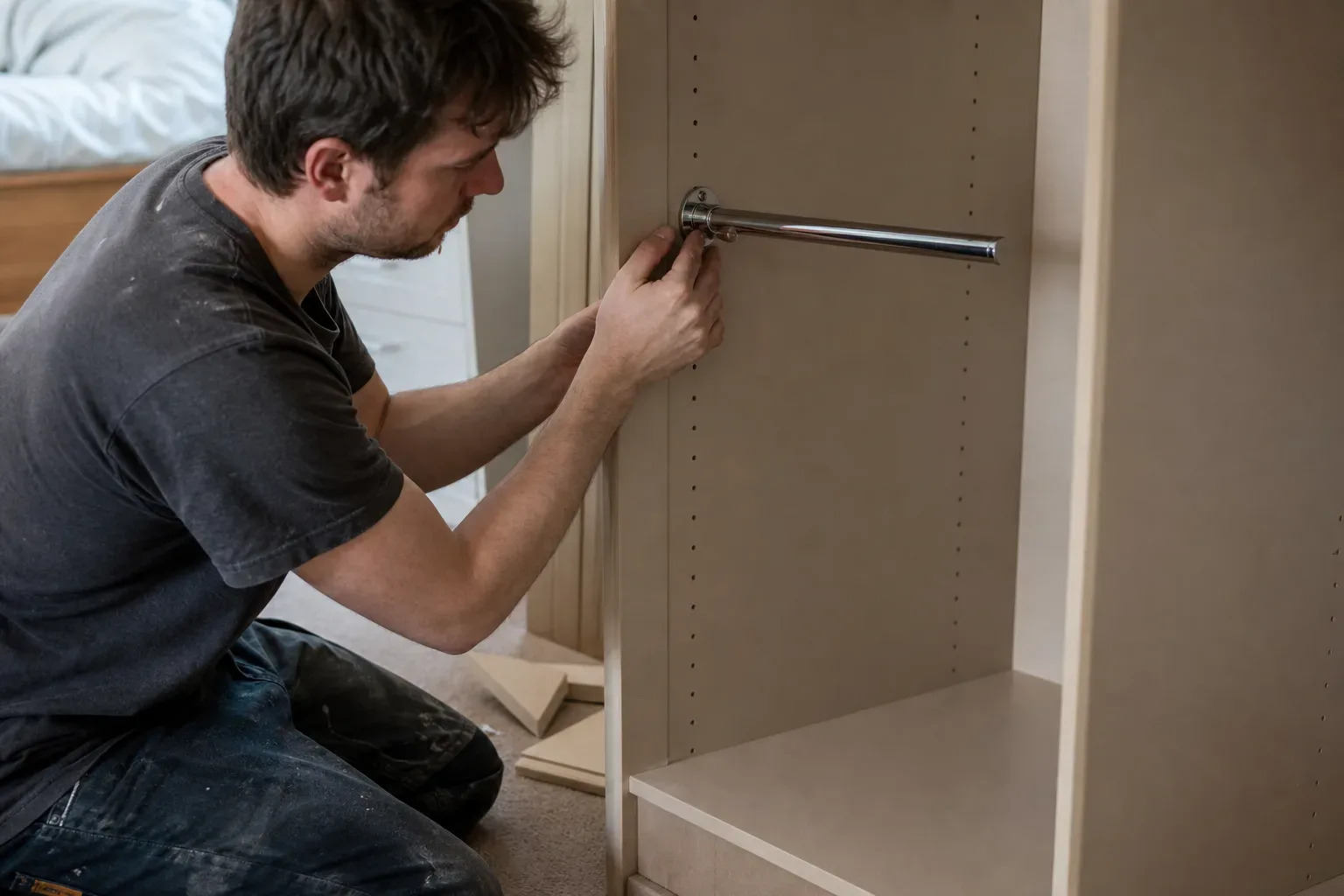
A standard single-height hanging rail suits long dresses, coats, and suits. Double-hang rails, where a shorter top rail sits above a second rail positioned roughly halfway down, are the most effective use of space for shirts, jackets, blouses, and folded trousers. Oval cross-section rails in chrome or satin nickel resist sagging better than round rails over wider spans, which becomes relevant in wardrobes exceeding 900 mm in width.
Valet rails, which pull forward and drop down on a hinged arm, are useful in deeper wardrobes where rear-hung garments can be hard to reach. Trouser racks that fan out on a rotating mount are a compact alternative to folding trousers over a rail. Both accessories are fitted inside the carcass and add minimal cost relative to the improvement in daily usability.
Fixed and Adjustable Shelving
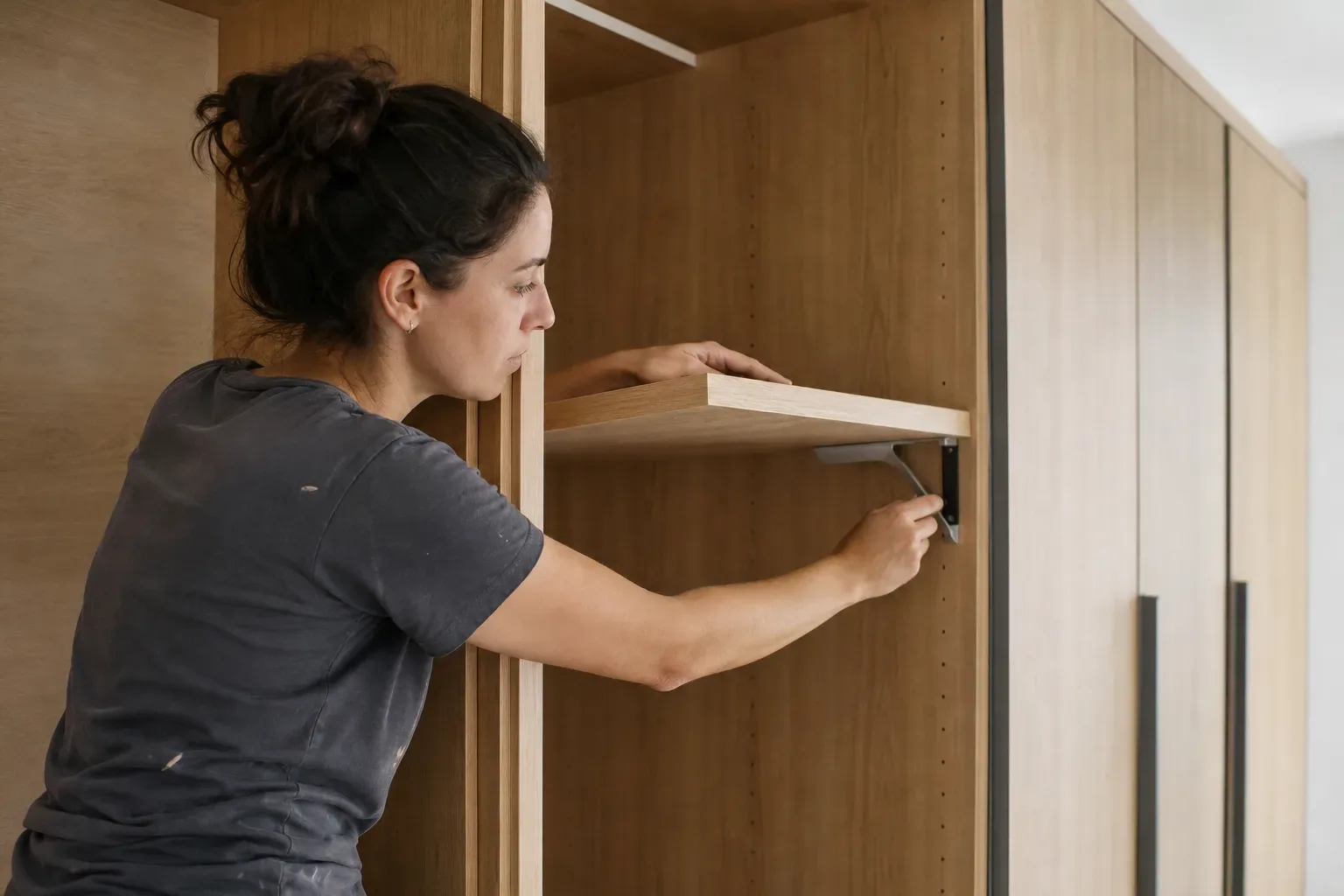
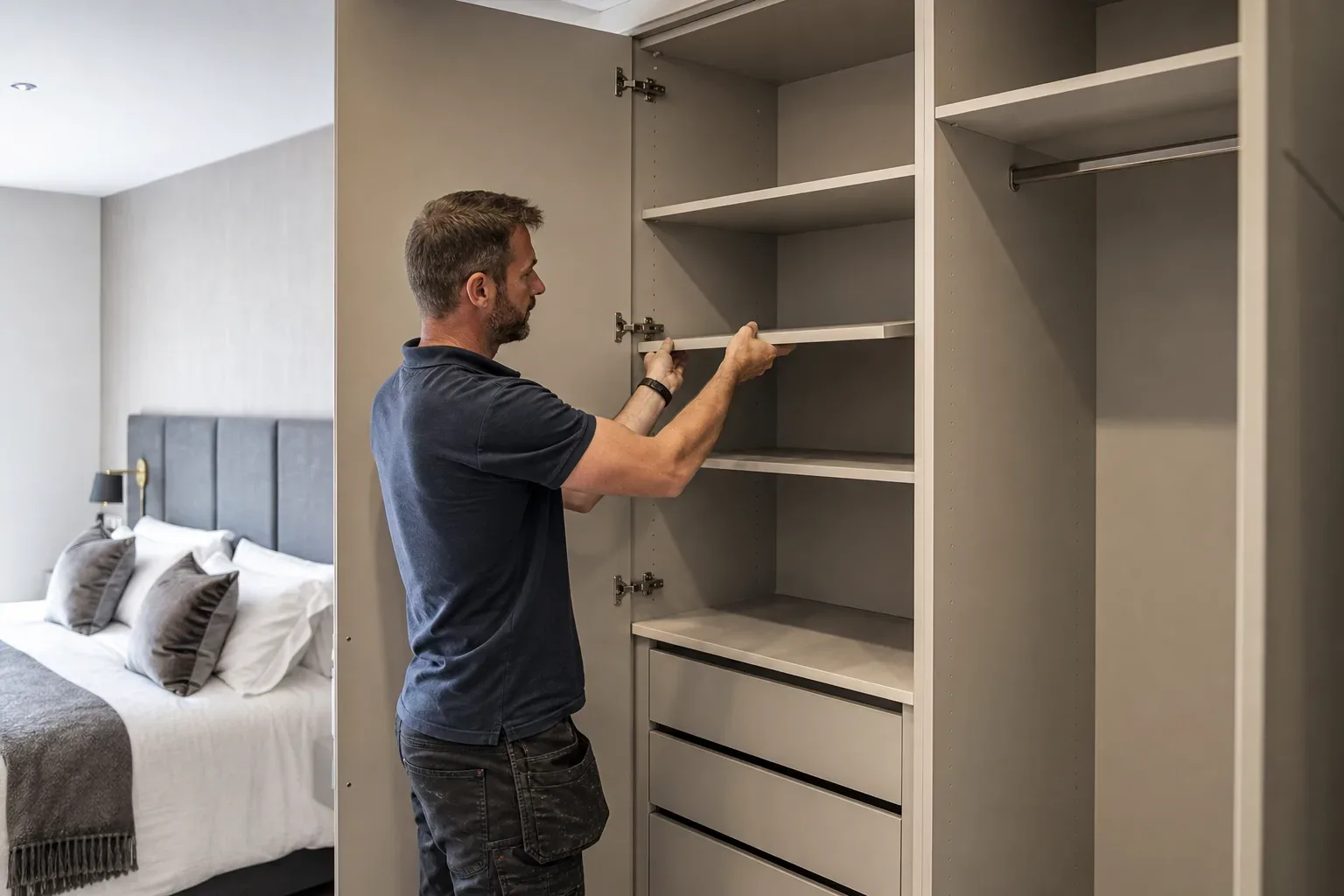
Fixed shelves are stable and load-bearing; adjustable pin-hole shelves offer flexibility as your storage needs shift. Shelf depths of 350–450 mm suit folded knitwear and accessories, while shallower 200–250 mm shelves work well for shoes displayed heel-out. Specifying shelf spacing carefully, typically 280–320 mm apart for folded clothing, prevents the common problem of over-deep cavities where items stack and topple.
For shoes specifically, angled shoe shelves at roughly 15–20 degrees let you see the toe of each pair at a glance. A standard shoe shelf allows approximately six pairs per 900 mm of width. Over a three-metre wardrobe run, that translates to eighteen or more pairs stored neatly in a single section without stacking.
Drawer Inserts and Boxes
Integrated drawer boxes fitted directly into the wardrobe carcass keep folded items contained and visible when opened. Soft-close drawer runners are now standard on most mid-range and premium fittings, eliminating the slamming common in older furniture. Drawer depths between 150 mm and 200 mm suit most clothing; deeper drawers, around 250–300 mm, work better for bulkier items like knitwear or denim.
Jewellery trays, typically in velvet-lined wood or moulded polymer, sit inside a standard drawer and subdivide it into compartments for rings, watches, and chains. Tie and belt racks can fit inside the same drawer space or mount on the inner face of a door. Both additions cost relatively little but remove the clutter that otherwise accumulates on bedroom surfaces.
Door-Mounted Accessories
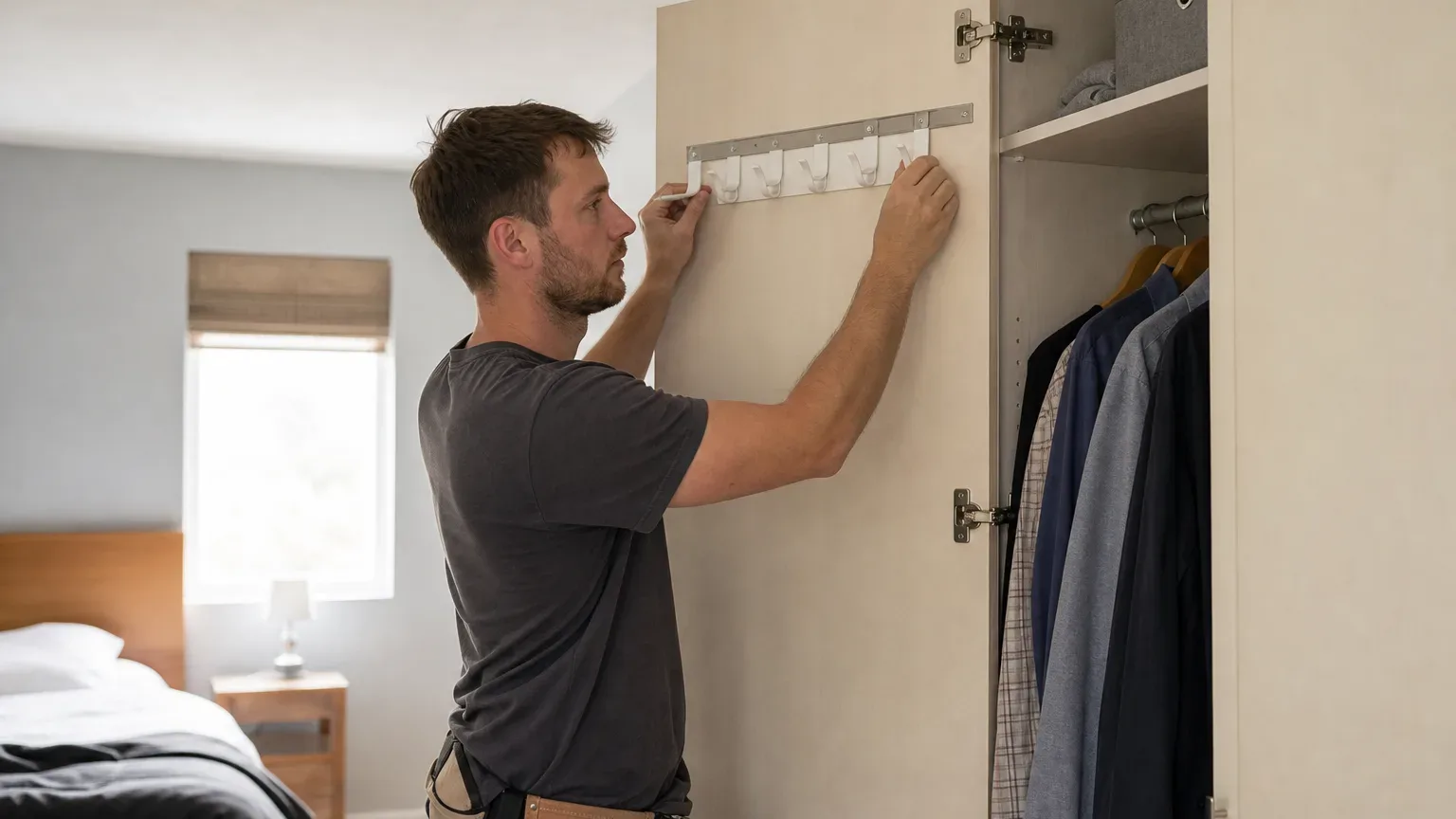
The inner face of a wardrobe door is frequently unused. Full-height door panels can carry hooks, mirror panels, slim-line shoe pockets, or hanging organisers. A row of five or six hooks on a door back is sufficient for belts, bags, and scarves in a single tidy location. Mirror inserts on door backs serve double duty: they provide a functional mirror without consuming floor space and help reflect light into darker bedroom corners.
Sliding door fitted wardrobes require a slightly different approach because the door back is not as easily accessible mid-open. Accessories in these configurations tend to migrate to interior side panels or to pull-out fittings within the carcass itself.
Choosing Accessories to Suit Your Wardrobe Size
Smaller Single Units
A single wardrobe unit, typically 900–1,200 mm wide, benefits most from vertical division. Double-hang rails on one side combined with four or five shelves on the other creates a compact but genuinely complete storage zone. Adding even a two-drawer insert at the base keeps underwear and socks out of separate furniture, which is worth considering in smaller East Lothian rooms where every piece of furniture counts.
At the entry-level price point of £800–£1,500 for a single fitted unit including supply and fit, interior accessories are usually chosen from a set range. Specifying them clearly at the design stage avoids upcharges later.
Full-Wall and Mid-Range Installations
Across a full bedroom wall, typically 3–4 metres, there is room to divide the interior into genuine zones: long-hang, short-hang, shelving, drawers, and ancillary storage. Mid-range projects in East Lothian fall broadly in the £1,500–£3,500 bracket and include a meaningful interior fitting allowance. A good designer will propose a zone layout during the free home survey rather than leaving the client to specify accessories as an afterthought.
Internal LED lighting, sometimes strip-mounted along the front edge of shelves or under the top rail, makes accessories easier to see and is increasingly requested in full-wall projects. It is usually wired through a door-activated switch so the light comes on when the wardrobe opens.
Walk-In Wardrobes
Bespoke walk-in solutions, priced from £4,000 to £8,000 or above, justify the widest range of accessories because the storage system becomes a dedicated room. Island units with drawer towers, pull-out trouser racks, floor-to-ceiling shelving columns, and accessory drawers with custom insert trays all become practical at this scale. Lead time from confirmed order to installation typically runs 4–8 weeks, during which the internal specification can still be refined.
Materials and Finish Compatibility
Accessory finishes should complement the door and carcass finish. Chrome fittings suit contemporary high-gloss or handleless doors; brushed brass or black powder-coat pairs better with shaker-style or painted timber finishes. Most fitted wardrobe suppliers offer a coordinated accessories range so that rails, handles, and drawer runners share the same metal finish throughout.
Panel materials for shelves and drawer boxes are generally 18 mm melamine-faced board or moisture-resistant MDF in bedrooms without significant humidity concerns. For properties with south-facing bedrooms that warm up in summer, moisture-resistant board is worth specifying regardless, as it resists the slight swelling that affects standard board over time.
Getting the Specification Right
The free home survey that fitted wardrobe companies offer across East Lothian, covering towns including Haddington, North Berwick, Musselburgh, Dunbar, Tranent, and Prestonpans, is the right point to work through interior accessory choices in detail. Bring a rough list of what you currently store in bedroom furniture and how you prefer to access it. That conversation allows the designer to translate everyday habits into a specific rail configuration, shelf layout, and drawer count rather than applying a generic interior template.
Written quotes typically follow within 3–5 working days of the survey. Comparing quotes on interior fittings specifically, not just carcass and door price, reveals significant differences between suppliers and is the clearest way to assess value.
Frequently Asked Questions
What Are Fitted Wardrobe Interior Accessories?
Fitted wardrobe interior accessories are the fittings installed inside the carcass that organise your storage, including hanging rails, fixed and adjustable shelves, drawer boxes, shoe racks, trouser rails, jewellery trays, and door-mounted hooks or pockets. They are specified during the design stage and fitted as part of the overall installation.
Can I Change the Interior Accessories After the Wardrobe Is Installed?
Many accessories, particularly those on adjustable pin-hole shelving systems, can be repositioned after installation. Fixed drawer boxes, integrated LED strips, and some rail systems are more permanent, so it is best to finalise as much of the interior specification as possible before installation begins.
Do Interior Accessories Cost Extra on Top of the Wardrobe Price?
It depends on how the quote is structured. Some suppliers include a standard interior fitting package within their price; others quote the carcass and doors separately from internal fittings. Always ask for a fully itemised quote so you can compare like for like across different East Lothian fitters.
What Interior Fittings Work Best in a Small East Lothian Bedroom?
In a compact room, double-hang rails, angled shoe shelves, and a two or three-drawer insert at the base of the wardrobe make the most efficient use of limited space. Avoiding a single full-height hanging rail and instead dividing the interior vertically typically doubles the effective garment capacity in the same footprint.
How Long Does It Take to Install a Fitted Wardrobe with Full Interior Fittings?
A standard single-wall fitted wardrobe, including interior accessories, typically takes 1–2 days for a two-person crew. A walk-in wardrobe or full-room installation with more complex internal fittings usually takes 3–5 days, covering fitting, finishing, and snagging.